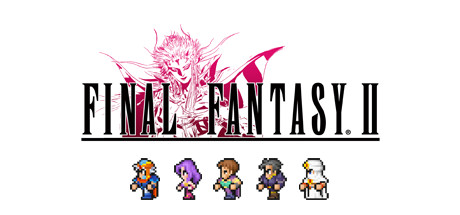
After finishing the first Final Fantasy, I wanted to see how the series would build on its beginning. Final Fantasy II was interesting because it was already willing to change things. Some of those changes worked better for me than others, but I enjoyed seeing the series experiment so early in its history.
The biggest difference for me was getting to know named characters. Following Firion and meeting people such as Minwu, Cid, Princess Hilda and Leon gave the journey more of a personal focus. I enjoyed seeing how their stories connected and how the people Firion encountered became part of the larger struggle.
Wild Rose and a world worth talking to
One of my favourite additions was the keyword system. Learning about a subject and then asking different people about it made conversations more interesting. I liked being able to return to an NPC with something new to ask and see what they had to say.
“Wild Rose” was especially memorable. As the rebellion’s password, it gave those conversations a sense of connection. It became a way to recognise allies and find people who were part of the same cause.
The dialogue and interactions helped make the world feel more involved than the first game. I enjoyed visiting different cities, meeting their inhabitants and learning more about the places I was travelling through.
Places that stayed with me
The Dreadnought and Pandaemonium were among the locations I enjoyed most. They gave the adventure distinct places to remember, and exploring them was part of what made the journey worthwhile.
I also enjoyed Deist and the storyline surrounding the wyverns. Alongside the different towns and characters, it was another opportunity to see the series expand its world and mythology.
Discovering the Chocobo Forest was a particular highlight. Having experienced chocobos in later Final Fantasy games, it was exciting to encounter them here in the game that introduced them. Going back through the series has made these discoveries more enjoyable because I can recognise how much certain ideas grew over time.
The music was another part of the experience I enjoyed. Hearing these earlier compositions through the Pixel Remaster helped make exploring the world and its locations memorable.
An experiment I appreciated more than I enjoyed
The progression system was the part I liked least. Final Fantasy II develops characters through the actions they take rather than following the first game’s conventional levelling system.
I appreciated the willingness to try something different. It was exciting to see the developers experiment rather than repeat the same formula, but the result was not my favourite system to play.
That is why I would recommend Final Fantasy II mainly to dedicated Final Fantasy fans. Its characters, dialogue and discoveries gave me plenty to enjoy, and it is an interesting step in the series’ development. For someone who wants to understand how Final Fantasy evolved, it is worth experiencing, even if every experiment does not become a personal favourite.